
What Is Dune Bashing?
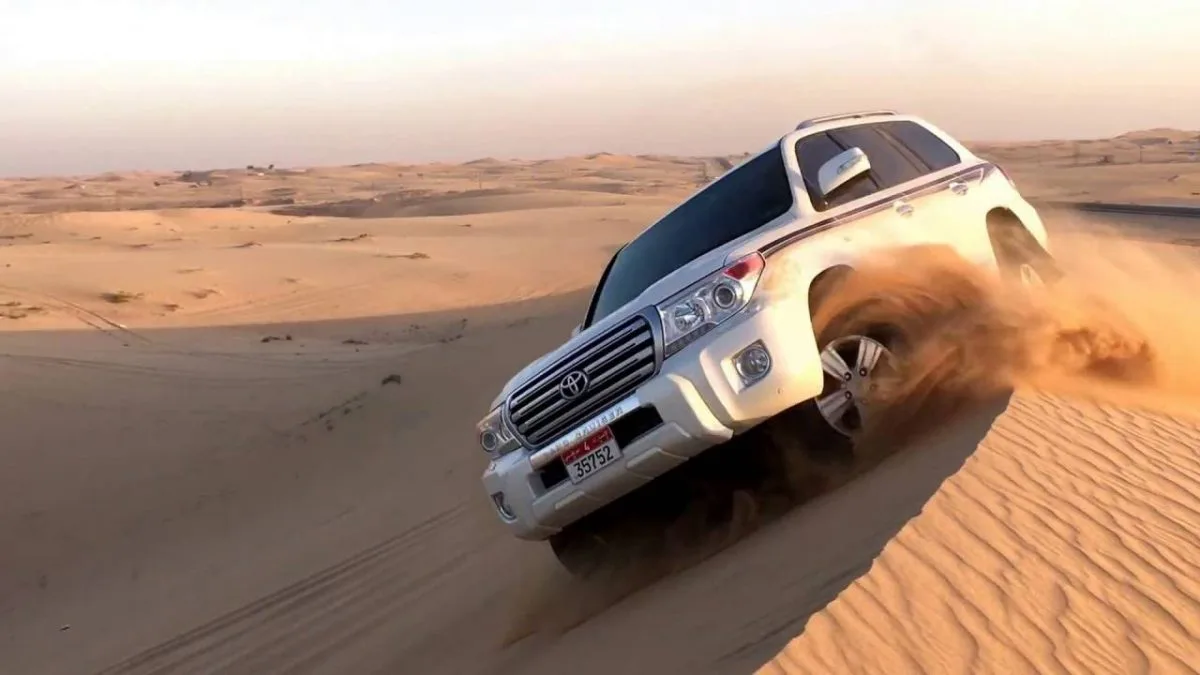
Dune bashing is an adrenaline-pumping off-road motorsport that involves driving specialized four-wheel-drive vehicles up, down, and sideways across large sand dunes. On an Abu Dhabi evening desert safari, dune bashing takes place in the towering red sand dunes of the Al Khatim Desert. Led by licensed off-road desert marshals, a typical dune bashing session lasts approximately 25 minutes.
During the session, your driver navigates steep sand ridges, climbs towering windward dune slopes, and glides sideways down 300-foot dune bowls, delivering an exhilarating roller-coaster thrill in a safe, controlled environment.
The Physics and Engineering Behind Dune Bashing
Navigating soft desert sand requires specialized vehicle preparation and driver physics knowledge. Before driving off the paved highway into Al Khatim, safari marshals perform critical mechanical preparations:
1. Tire Pressure Deflation (PSI)
On highway pavement, standard SUV tires are inflated to approximately 35 PSI (Pounds per Square Inch). Before entering soft sand, drivers use mechanical pressure gauges to deflate tires down to 12 to 15 PSI. Lowering the air pressure widens the tire tread footprint on the sand, increasing traction and allowing the 2.5-ton vehicle to float across soft dunes without digging in or getting stuck.
2. Four-Wheel Drive (4WD) Low-Range Engagement
Drivers shift the transfer case into 4WD Low or Lock mode, locking the center differential. This distributes equal torque to all four wheels, preventing wheel spin and providing maximum climbing power up 45-degree sand slopes.
Vehicle Specifications & Safety Standards
Licensed safari operators in Abu Dhabi utilize top-tier off-road SUVs built to withstand desert terrain:
- Vehicle Models: High-spec Toyota Land Cruiser V8 / 300 Series or Nissan Patrol Y62.
- Internal Roll Cages: Custom heavy-duty steel roll cages welded inside the vehicle cabin to protect passengers in the rare event of a rollover.
- Safety Restraints: Six 3-point lap and shoulder seatbelts fitted for every passenger seat. Wearing seatbelts is strictly mandatory during dune bashing.
- ITC Driver Certification: Marshals complete rigorous off-road licensing exams conducted by Abu Dhabi's Integrated Transport Centre (ITC) and carry first-aid certification.
Experience Thrilling High Dune Bashing
Ride with licensed master marshals in safety-equipped 4x4 Toyota Land Cruisers across Al Khatim dunes.
Book Dune Bashing SafariTips to Prevent Motion Sickness During Dune Bashing
- Eat Light Before the Safari: Avoid heavy, greasy meals right before your 3:00 PM pickup. A light lunch 2 hours prior is ideal.
- Take Motion Sickness Medication: If prone to car sickness, take an over-the-counter anti-nausea tablet (such as Dramamine or Stugeron) 30 minutes before pickup.
- Sit in the Front Passenger Seat: Sitting upfront next to the driver offers a clear view of the horizon, reducing inner ear disorientation.
- Request Gentle Bashing: If traveling with elderly family members or young children, book a private Land Cruiser and ask your driver for a gentle dune ride (see our Private vs Shared Comparison Guide).
The Mechanical Engineering of Off-Road 4x4 SUVs
Dune bashing places immense physical demands on motor vehicles. To ensure passenger safety and vehicle reliability, safari operators invest exclusively in heavy-duty 4WD SUVs built for harsh desert environments:
- Toyota Land Cruiser V8 / 300 Series: Powered by high-torque V8 or twin-turbo V6 engines, full-time four-wheel drive, and heavy-duty coil-spring suspension designed to absorb hard dune landings.
- Nissan Patrol Y62: Featuring a 5.6-liter V8 engine producing 400 horsepower and Hydraulic Body Motion Control (HBMC) suspension to prevent excessive vehicle body roll during steep dune cresting.
Driver Training and Integrated Transport Centre (ITC) Licensing
Off-road safari drivers in Abu Dhabi are not regular city taxi drivers. Marshals must pass rigorous specialized off-road driving examinations administered by the Integrated Transport Centre (ITC). Drivers are tested on sand dune reading, vehicle momentum control, roll recovery, desert first aid, and defensive driving techniques.
Frequently Asked Questions About Dune Bashing Safety
1. Is dune bashing safe for first-time visitors and children?
Yes! Dune bashing is conducted by commercial off-road desert marshals certified by Abu Dhabi's Integrated Transport Centre (ITC). Vehicles are equipped with reinforced steel roll cages, GPS tracking, and 6 passenger seatbelts. Drivers adjust off-road driving intensity based on passenger comfort.
2. Can pregnant women or people with back injuries participate in dune bashing?
No. Due to sudden drops and vehicle tilts over sand dunes, pregnant women and individuals with severe back or neck conditions should skip dune bashing. You can book a direct camp transfer vehicle that bypasses high dunes along a smooth flat track.
3. What should I do if I feel car sick during dune bashing?
If you experience motion sickness, inform your driver immediately. Safari marshals can pull over on a high dune ridge to let you step out into fresh air, or switch to a gentle flat driving mode.
4. Why do drivers deflate car tires before driving into the desert?
Drivers deflate tire pressure from 35 PSI down to 12-15 PSI to widen the tire tread footprint. This increased surface contact allows the 2.5-ton Land Cruiser to float over soft sand without digging in or getting stuck.
5. Can I request a gentle dune bashing drive for my family?
Yes. By booking a Private 4x4 Vehicle Charter, you have 100% control over dune bashing intensity. You can request a scenic, low-speed dune drive tailored specifically for young children or elderly family members.
Understanding Sand Dune Topography in Al Khatim
The desert dunes of Al Khatim differ significantly from smaller coastal sand hills found near urban cities. Characterized by deep red quartz sand, Al Khatim features dramatic dune structures that dictate off-road driving lines:
- Windward Dune Slopes: The wind-facing side of a dune features compacted, firm sand packed by prevailing desert winds. Drivers use these firm slopes to gain speed and momentum when climbing steep ridges.
- Slip Faces and Sand Bowls: The leeward side of a dune forms a steep, soft slip face angled at 30 to 35 degrees. Drivers crest the top ridge slowly before letting the 4x4 glide sideways down the soft slip face into the sand bowl below.
- Ridge Cresting: Experienced marshals pause briefly on high dune crests to inspect the terrain below before choosing the safest descent path.

Comments (0)
Be the first to leave a comment on this article!
Leave a Reply